
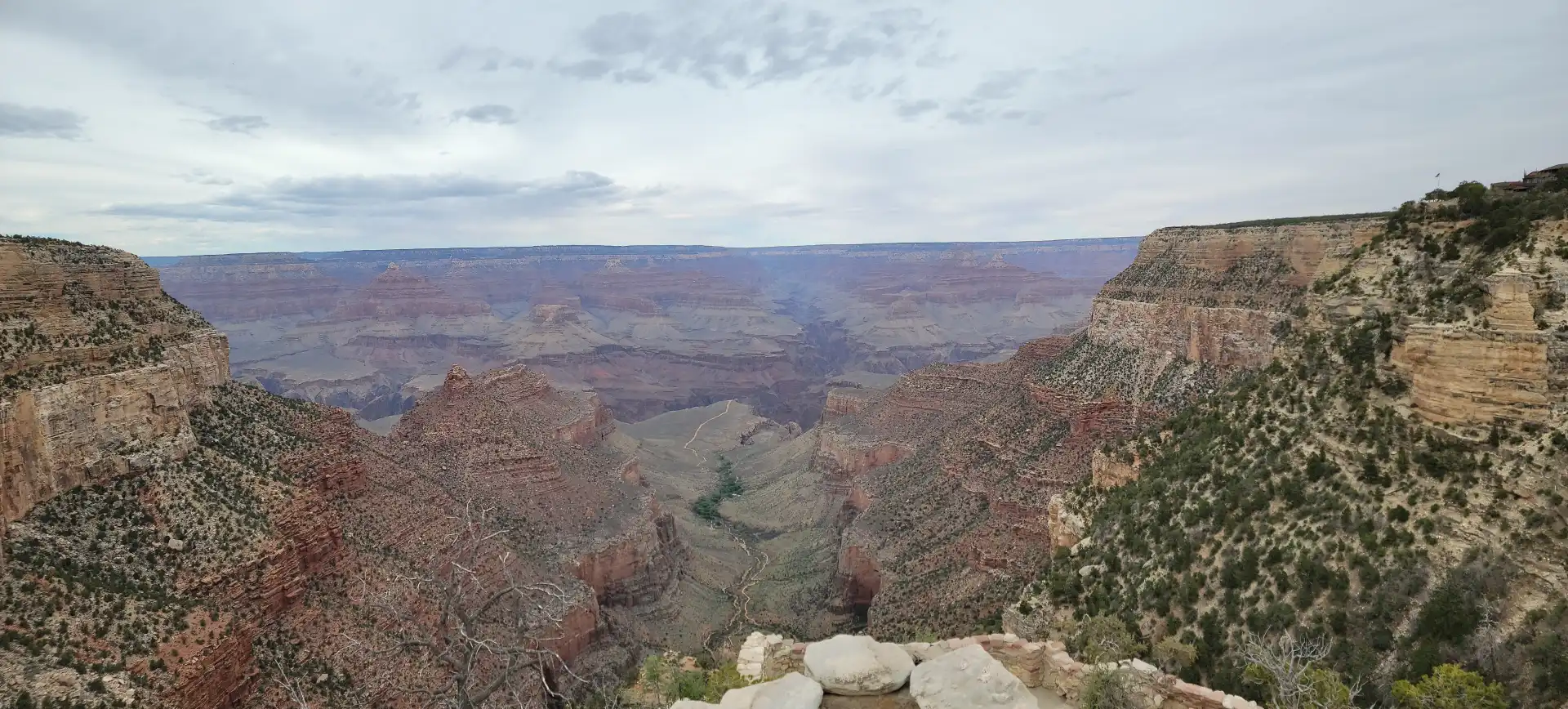
Grand Canyon National Park Weather: What to Expect Year-Round
Grand Canyon National Park Weather changes with the seasons and elevation—summer days on the South Rim are warm, while winters bring snow, especially on the higher North Rim (closed mid-October to mid-May). Temperatures in the inner canyon can exceed 100°F (38°C) in summer, so checking Grand Canyon National Park Weather before your visit is key to dressing appropriately and staying safe.
Winter at Grand Canyon National Park
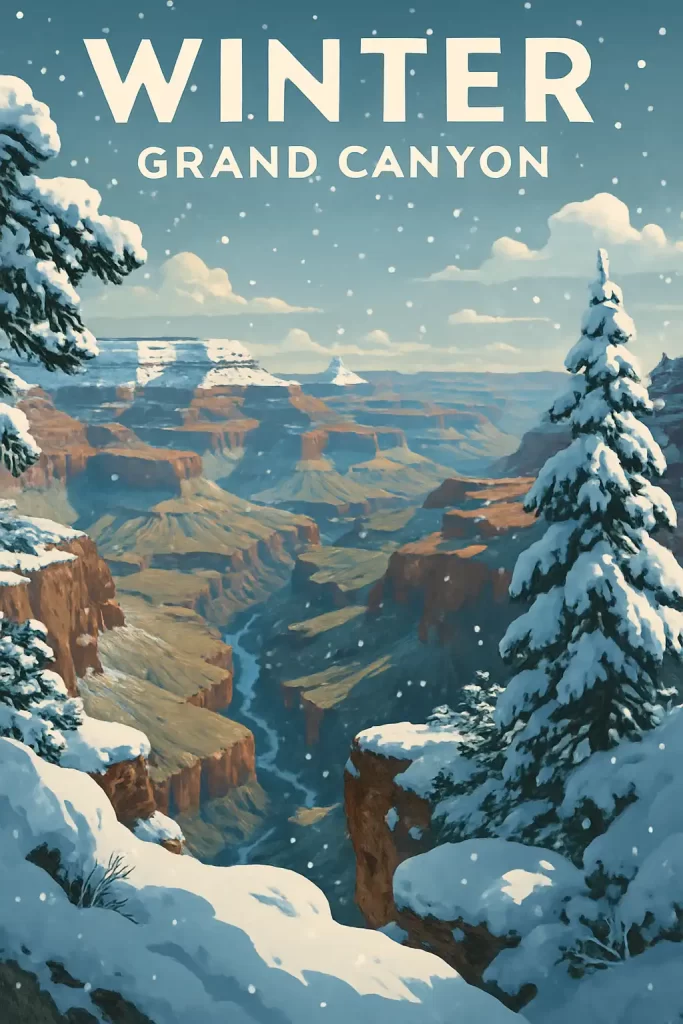
Winter transforms Grand Canyon National Park into a breathtaking wonderland of snow-draped cliffs and serene vistas. From December through February, the South Rim—sitting at 7,000 feet—often receives heavy snowfall, with average accumulations ranging from 50 to 100 inches per season. Daytime highs hover in the 40s °F, while nighttime lows frequently plunge into the teens. In contrast, the Inner Canyon, particularly around Phantom Ranch at 2,460 feet, remains much warmer with daytime highs in the 50s to 60s °F and crisp nights dipping to the mid-30s.
Winter also brings some of the clearest skies, offering pristine conditions for photography and stargazing. However, the North Rim is closed during winter due to its elevation and heavy snow. Visitors should be prepared for icy trails and road closures, especially in early mornings.
Spring at Grand Canyon National Park
Grand Canyon National Park Weather
Spring (March to May) is a transitional season marked by thawing snows, blooming wildflowers, and increasingly warmer days. March temperatures average highs in the mid-50s °F at the South Rim, rising to the low 70s °F by May. Nighttime lows can still dip below freezing through April.
Spring is also one of the driest seasons, with minimal rainfall and light winds contributing to high fire danger in some areas. The Inner Canyon can reach highs of 80 °F by late spring. These months are ideal for hiking and photography, as trails are more accessible and the crowds are moderate.
Summer at Grand Canyon National Park
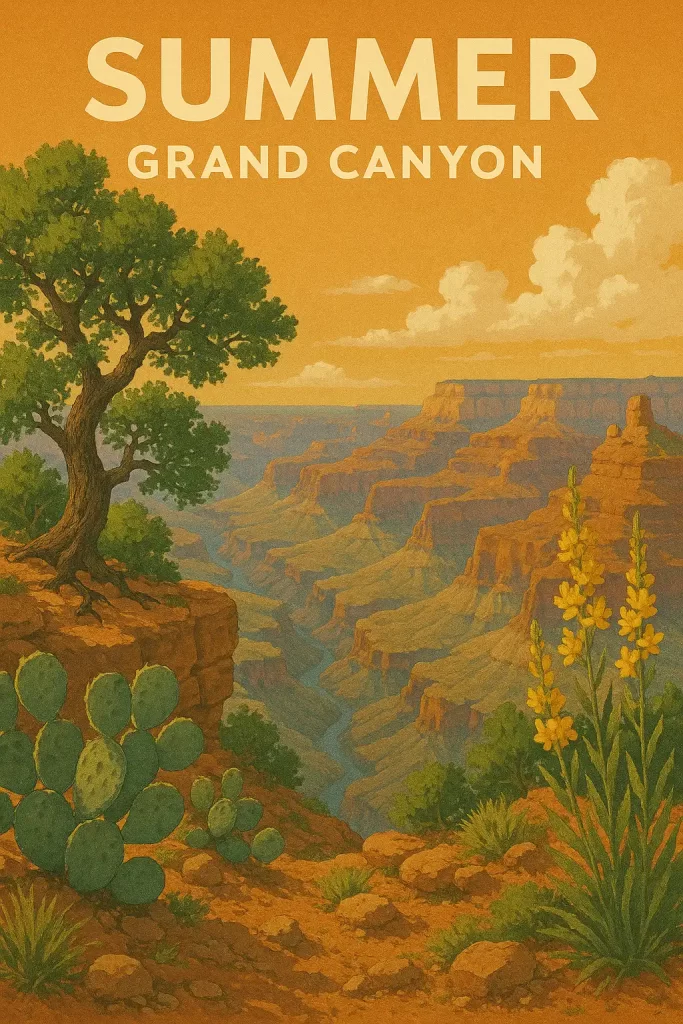
Summertime (June to August) at Grand Canyon National Park is marked by extremes. While the South Rim enjoys relatively mild temperatures—daytime highs in the low-to-mid 80s °F—the Inner Canyon can become dangerously hot, with temperatures soaring past 105 °F.
July and August are monsoon months, bringing dramatic afternoon thunderstorms that can trigger flash floods in slot canyons and washes. Visitors should start hikes early, carry plenty of water, and monitor weather alerts. Sunshine dominates the season with over 90% of days being mostly clear, making for vivid sunsets and dramatic cloudscapes during storms.
Fall at Grand Canyon National Park
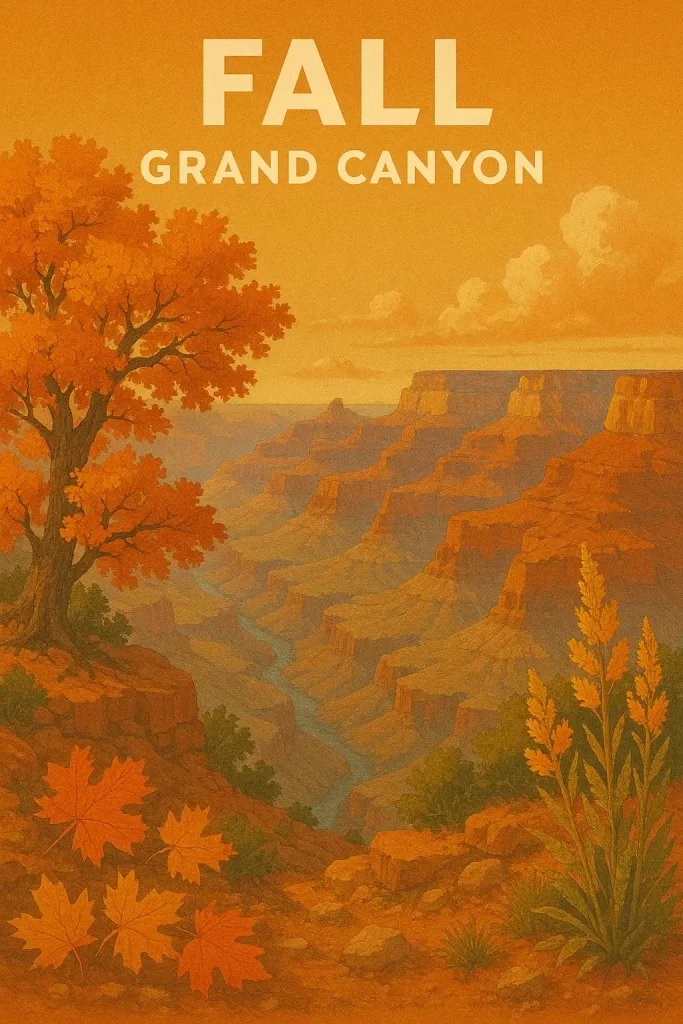
Fall (September to November) is a favorite among seasoned visitors, combining the summer’s fading warmth with thinner crowds and rich foliage—especially on the North Rim. September sees highs in the 70s °F at the South Rim, gradually dropping to the high 40s °F by November. Nighttime temperatures begin to freeze by mid-October.
This season offers stable weather and excellent hiking conditions. The monsoon moisture retreats by late September, leaving behind cool, dry air and clear skies. Fall colors, particularly among aspens on the North Rim, make October a peak visitation time.
Month- By – Month
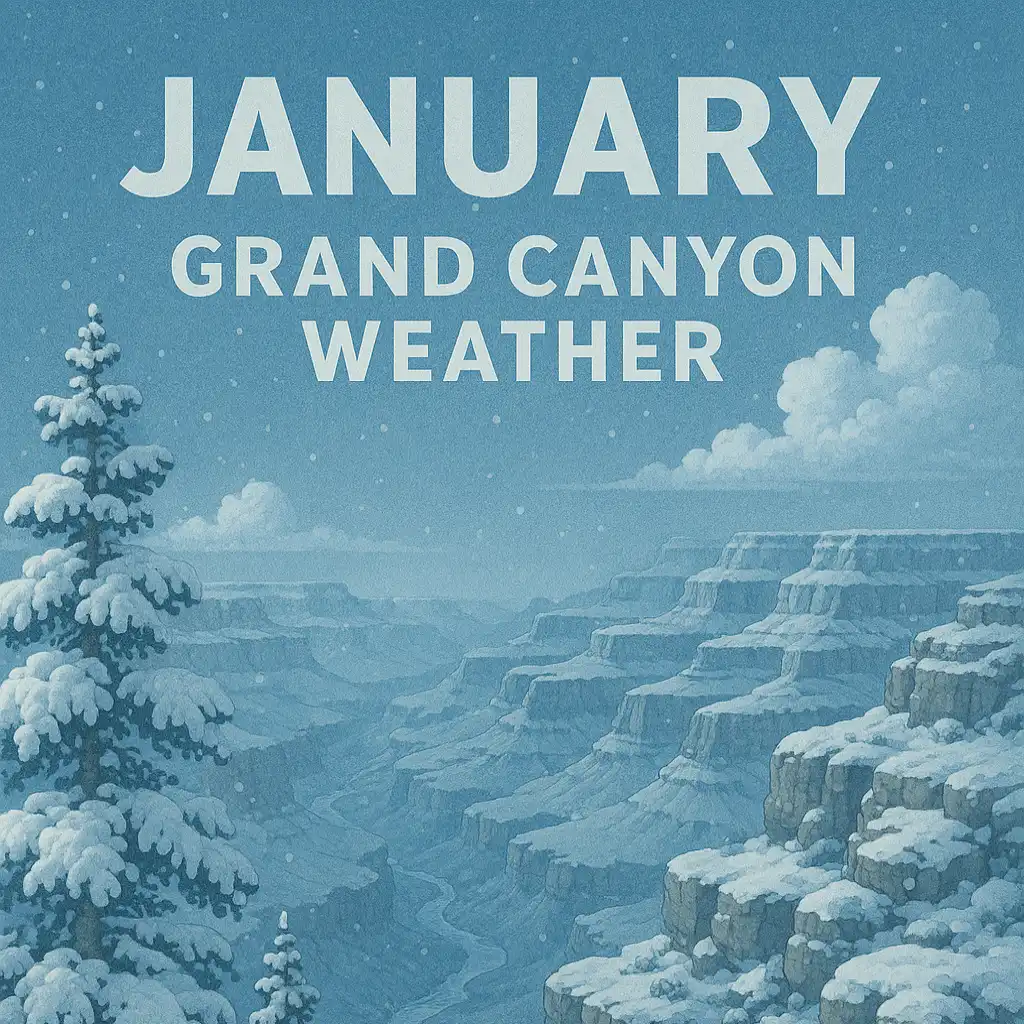
January Weather at Grand Canyon National Park
January is the coldest month at Grand Canyon National Park. The South Rim sees average highs of 41 °F and lows around 18 °F. Snowfall is common, with an average of 20 inches contributing to the season’s snowy landscape. Roughly 8% of the annual precipitation occurs this month, primarily as snow. The Inner Canyon remains more temperate with highs near 56 °F and lows around 36 °F.
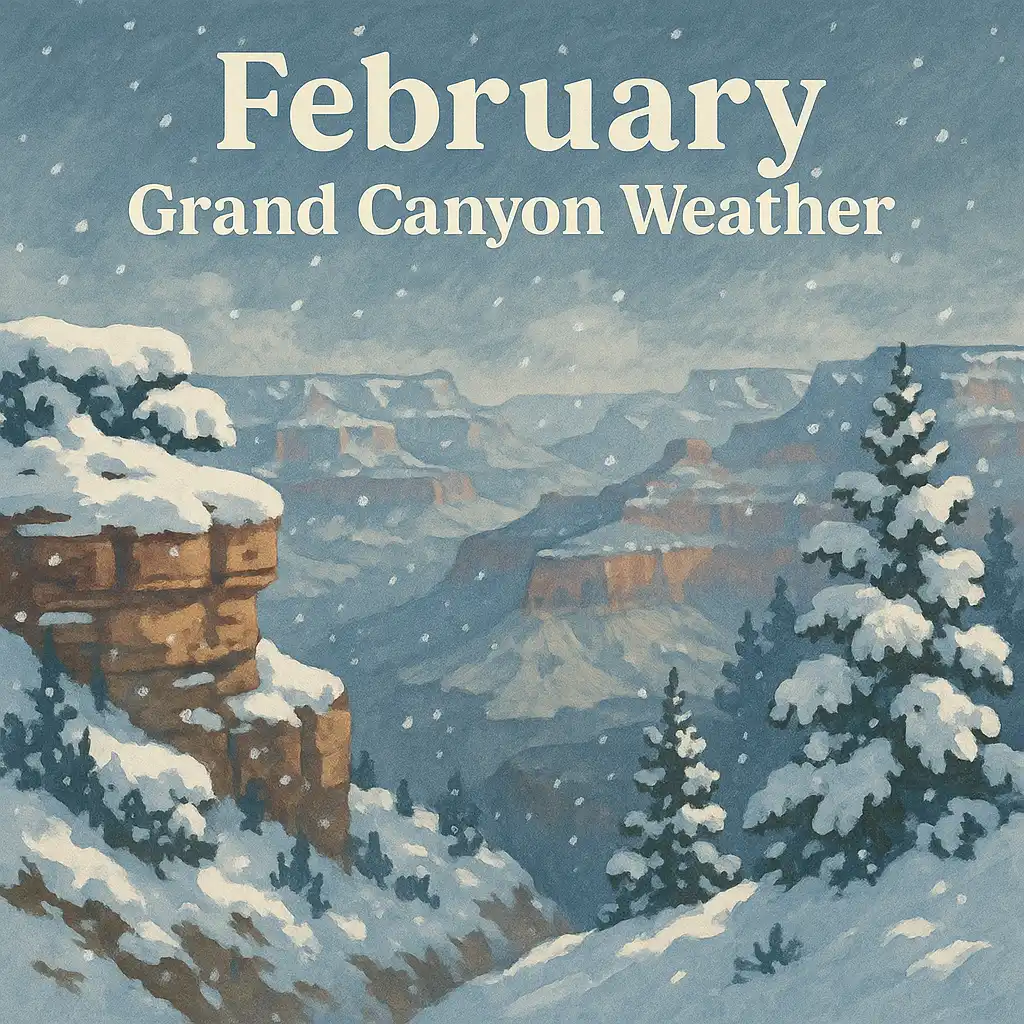
February Weather at Grand Canyon National Park
February remains cold but slightly drier. Average South Rim highs rise to 45 °F, and lows linger near 20 °F. Snowfall averages about 18 inches. Roughly 7% of annual precipitation occurs in February. Sunshine begins to increase, but snow and ice still dominate shaded areas.
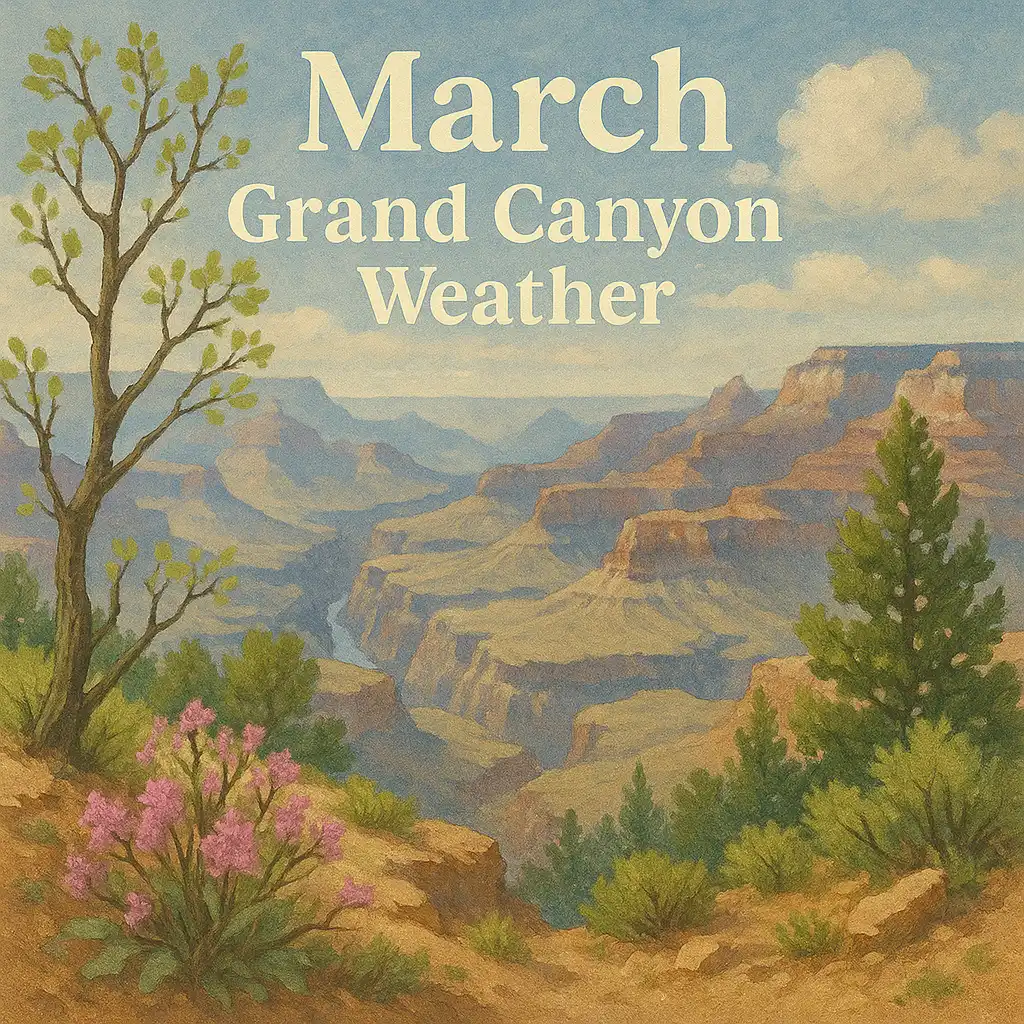
March Weather at Grand Canyon National Park
March signals the start of spring with highs climbing to 51 °F and lows near 24 °F. Snowfall reduces to around 12 inches, while rain begins to appear more frequently. Precipitation accounts for about 7% of the annual total. The Inner Canyon warms significantly, averaging highs in the 70s °F.
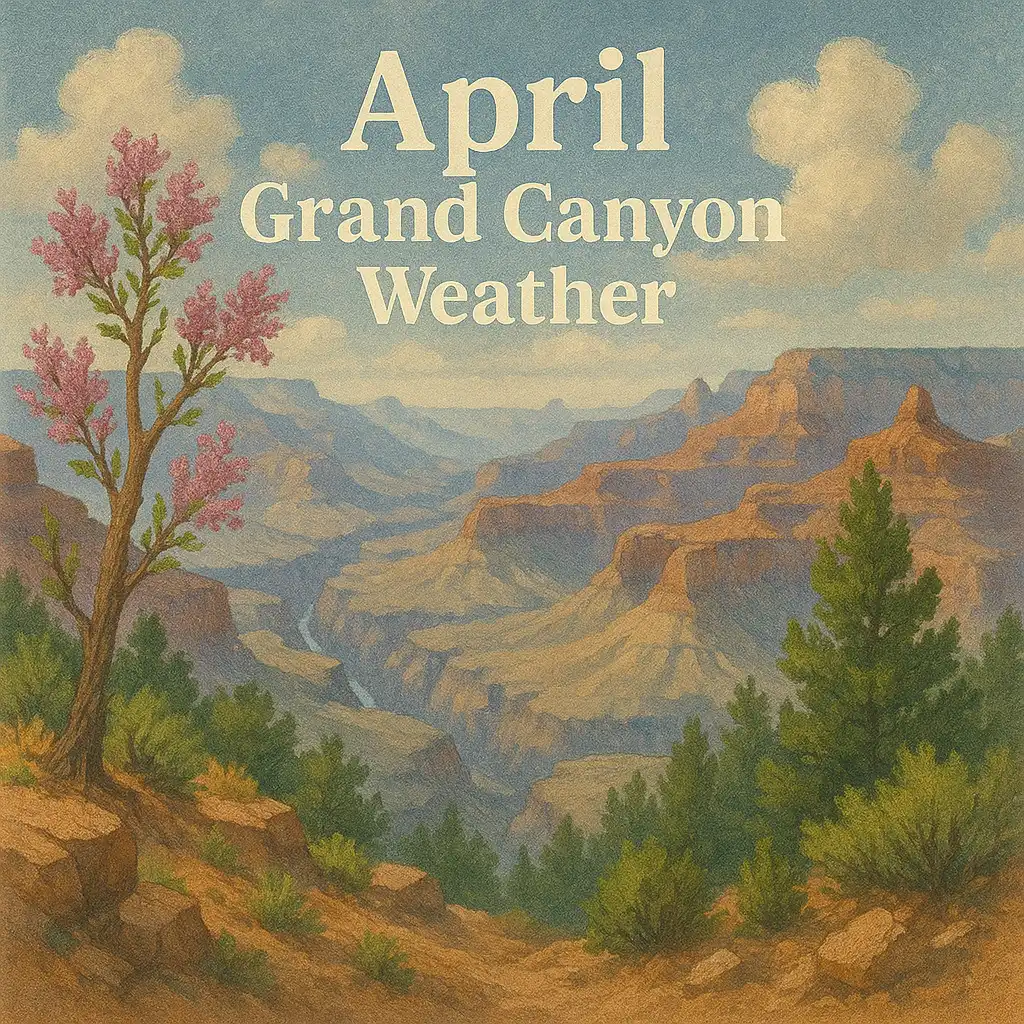
April Weather at Grand Canyon National Park
April is a transitional month with average highs of 60 °F and lows around 30 °F at the South Rim. Snow becomes rare, and precipitation drops to about 6% of the annual total. Trails become increasingly accessible, although mornings remain cold. This month is one of the best times for hiking and viewing wildlife.
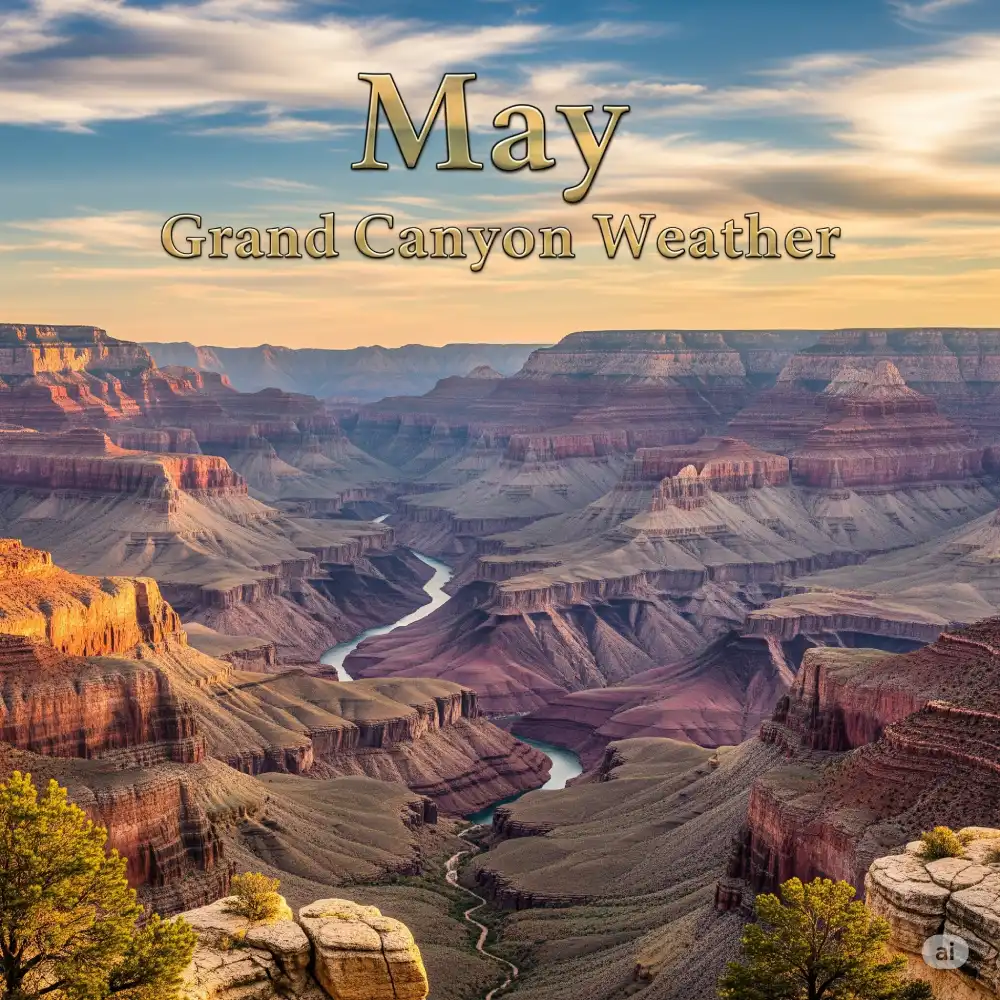
May Weather at Grand Canyon National Park
May ushers in stable, warm weather. Highs average 70 °F, lows hover around 37 °F. Rainfall is minimal, at about 4% of annual precipitation. Sunshine dominates with more than 85% of daylight hours being clear. Wildflowers bloom, and the South Rim becomes increasingly busy.
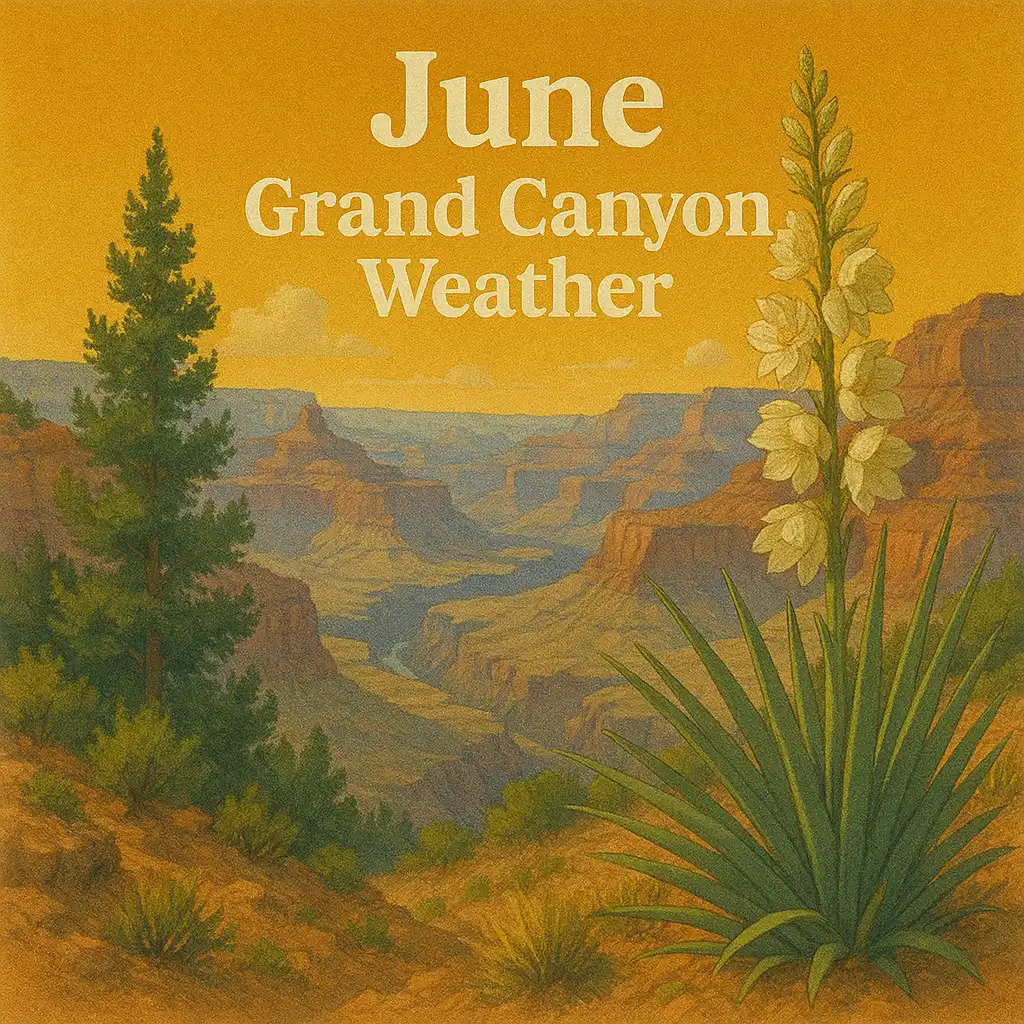
June Weather at Grand Canyon National Park
June is dry and warm with average highs reaching 82 °F and lows around 45 °F. Rainfall is nearly absent, accounting for just 2% of the yearly total. Days are long and sunny—perfect for photography but hazardous for deep canyon hikes. UV levels are high; sun protection is essential.
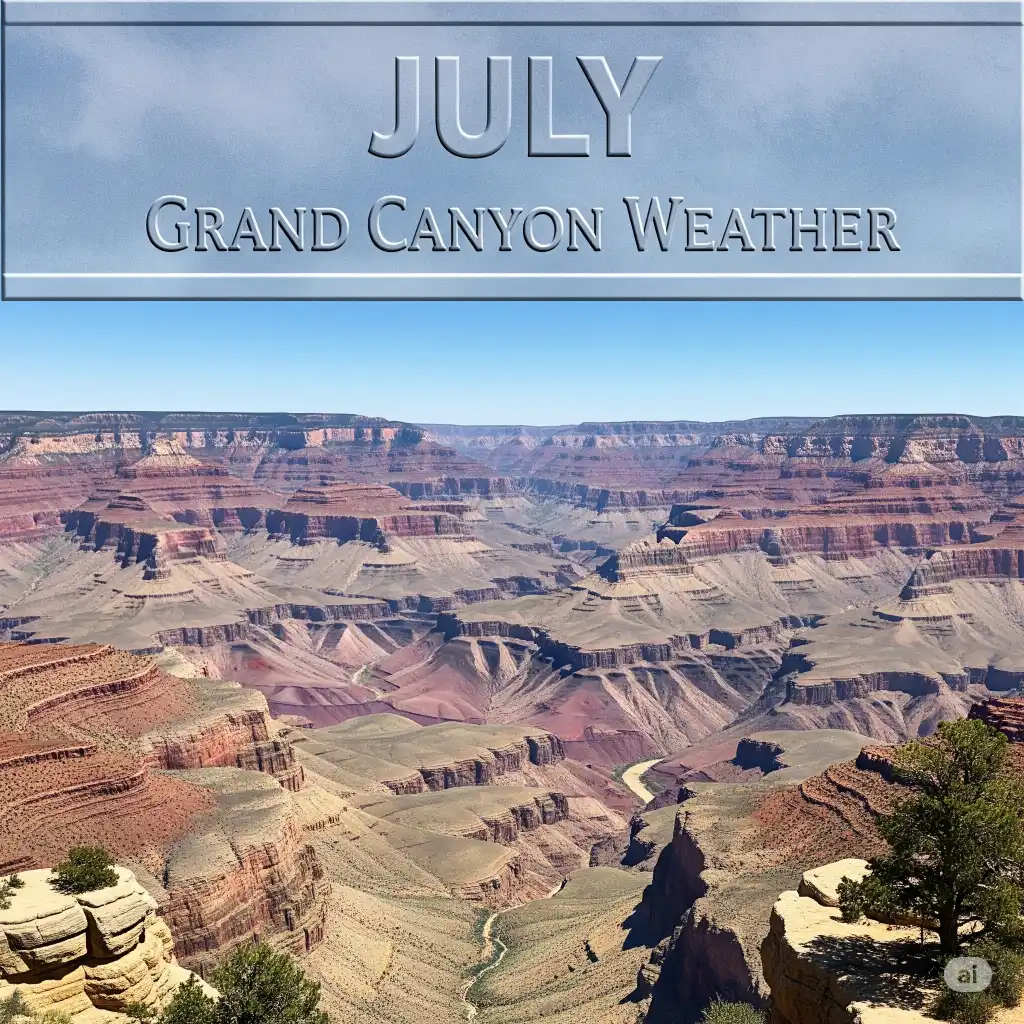
July Weather at Grand Canyon National Park
July introduces monsoon season. While the South Rim averages 84 °F during the day and 50 °F at night, the Inner Canyon can surpass 110 °F. Thunderstorms increase, with rainfall making up about 13% of the yearly total. Flash flood warnings become common, especially in slot canyons.
August Weather at Grand Canyon National Park
August continues the monsoon pattern. Highs average 81 °F, lows near 49 °F. Rainfall peaks, accounting for roughly 15% of annual precipitation. Visitors must remain vigilant about storm conditions. Despite this, sunshine still dominates mornings and early afternoons.
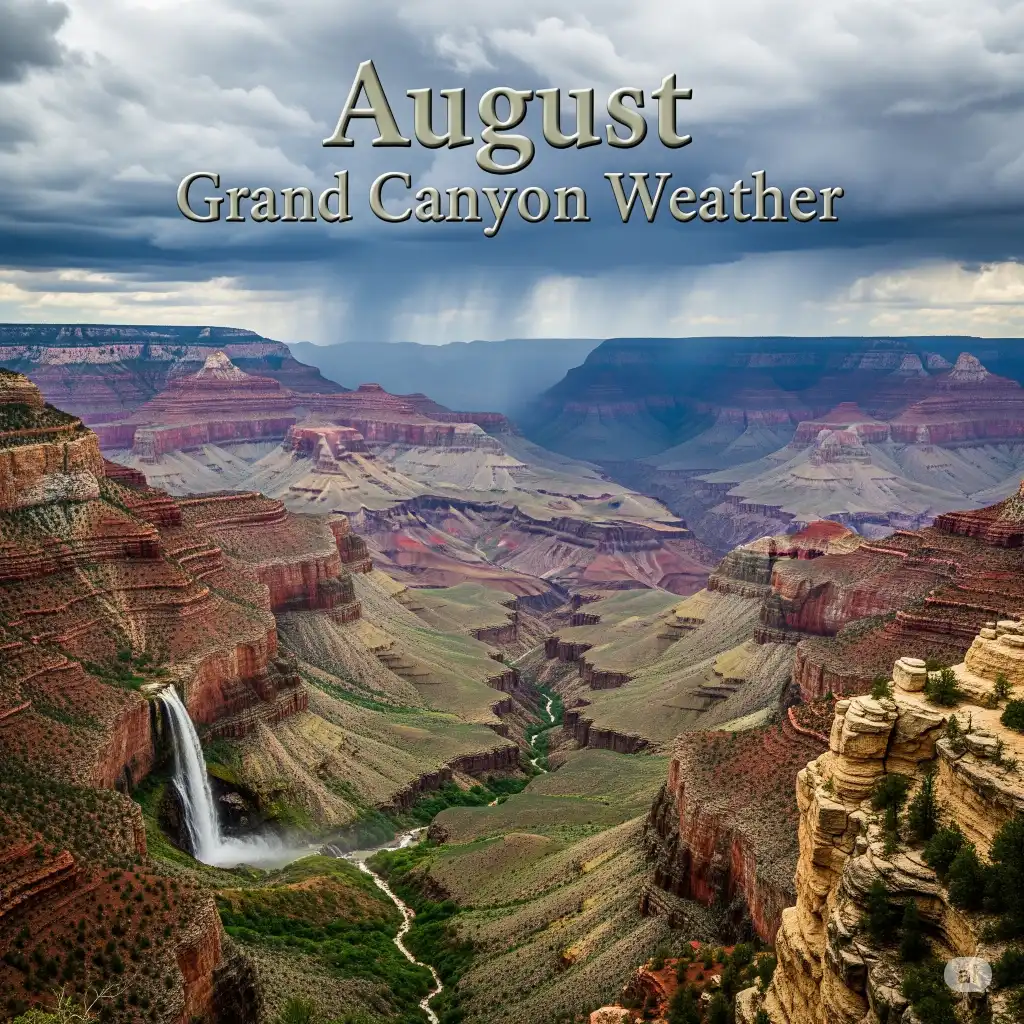
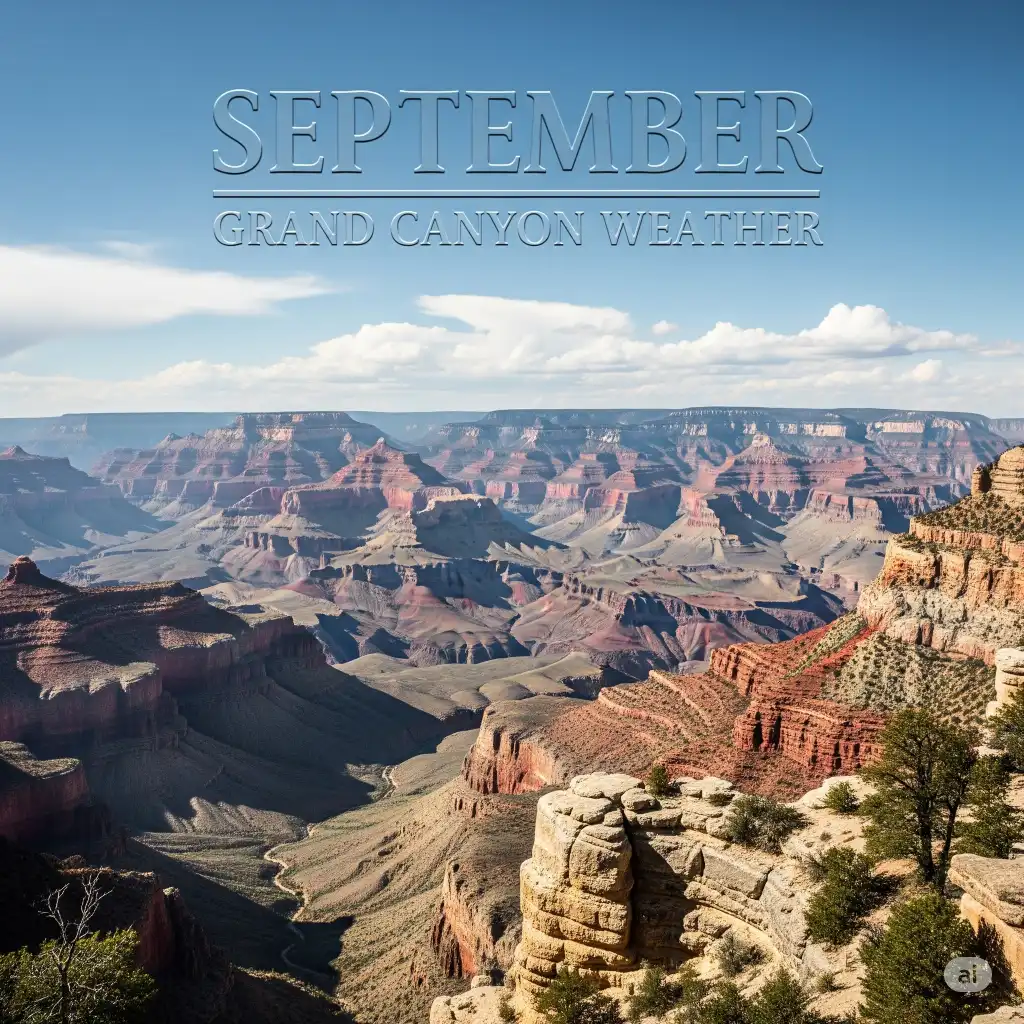
September Weather at Grand Canyon National Park
September offers respite from summer heat. Highs drop to 75 °F and lows to the low 40s °F. Rainfall decreases to about 9% of the annual total. This is a perfect month for hiking, with reduced risk of storms and more stable temperatures.
October Weather at Grand Canyon National Park
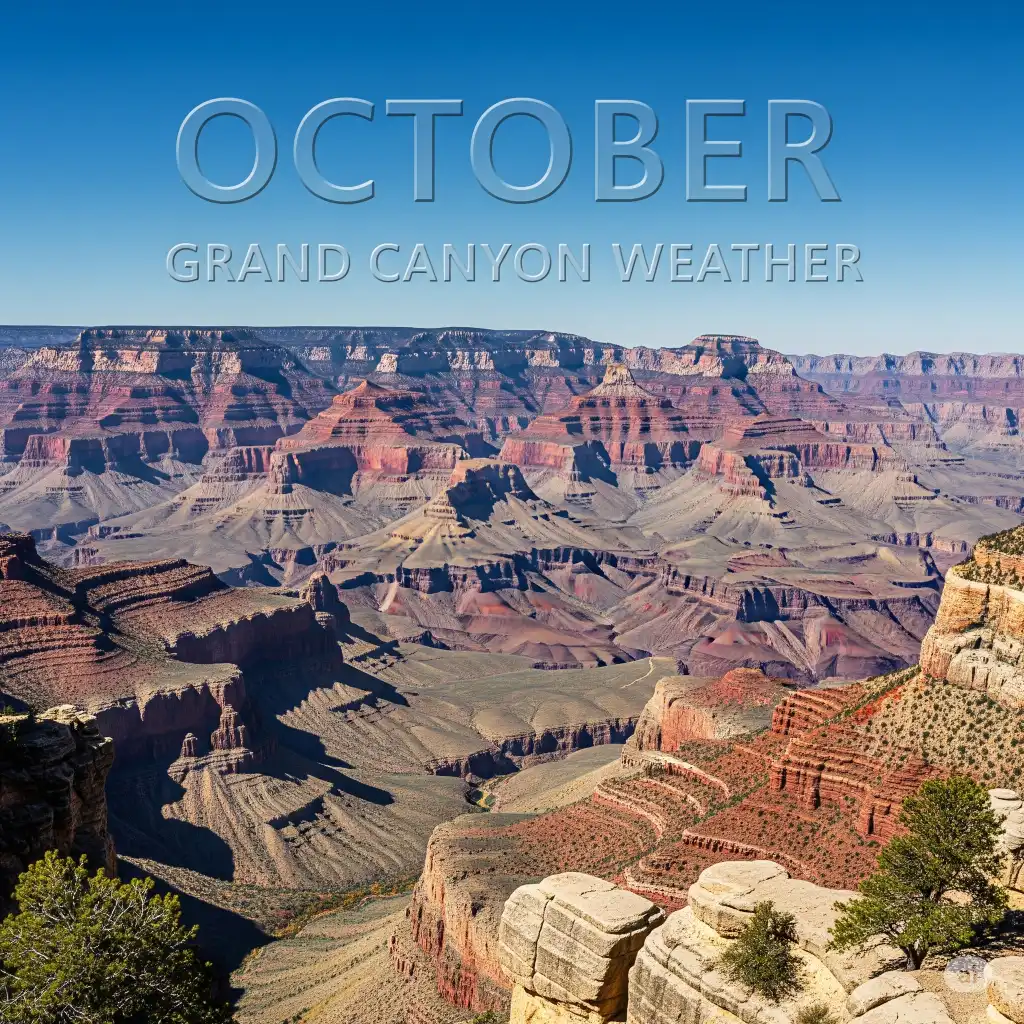
October is dry and cool. Highs average 64 °F, lows 33 °F. Precipitation accounts for 5% of the yearly average. The fall foliage on the North Rim is at its peak. Clear skies prevail, making this an exceptional time for photography and hiking.
November Weather at Grand Canyon National Park
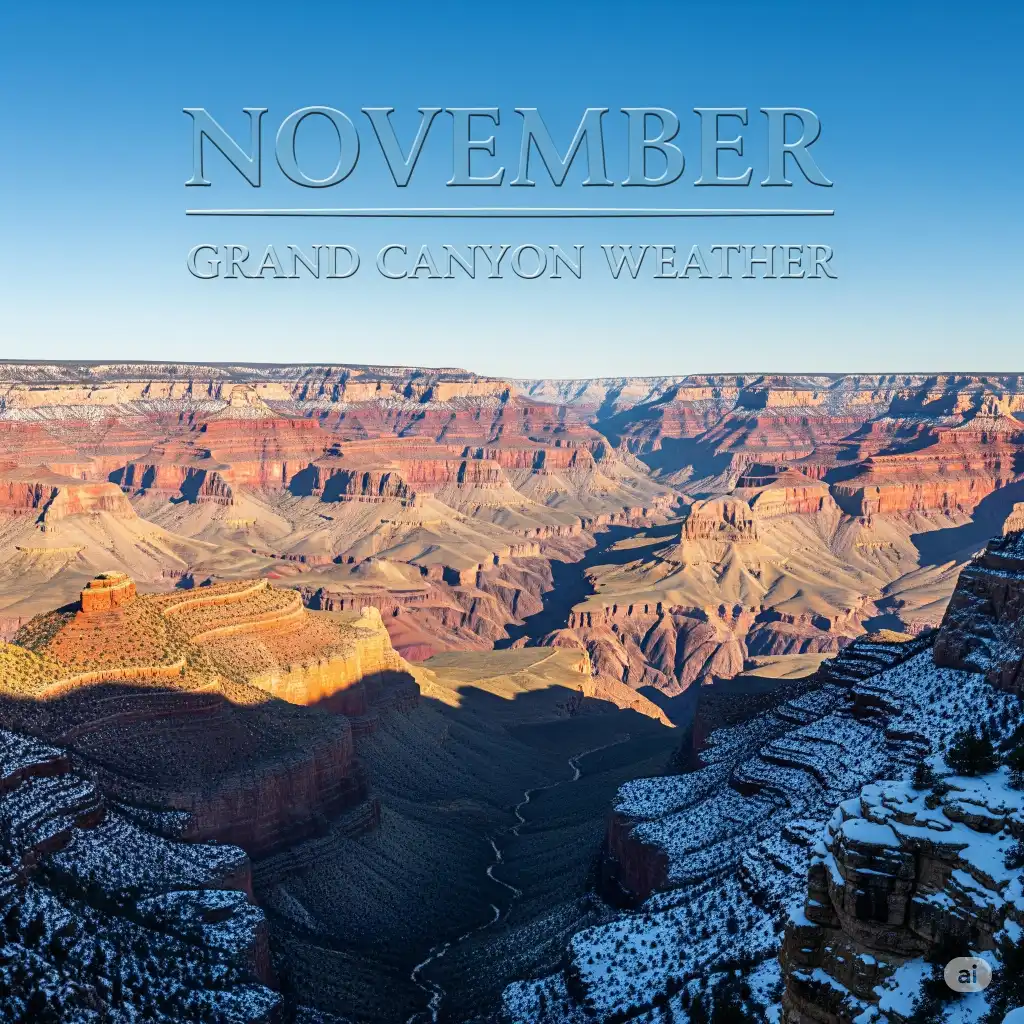
November is the onset of winter with highs dropping to 52 °F and lows to 26 °F. Rainfall and snow together contribute about 6% of the annual total. Night temperatures below freezing are common, especially at the South Rim. Some snowfall may occur late in the month.
December Weather at Grand Canyon National Park
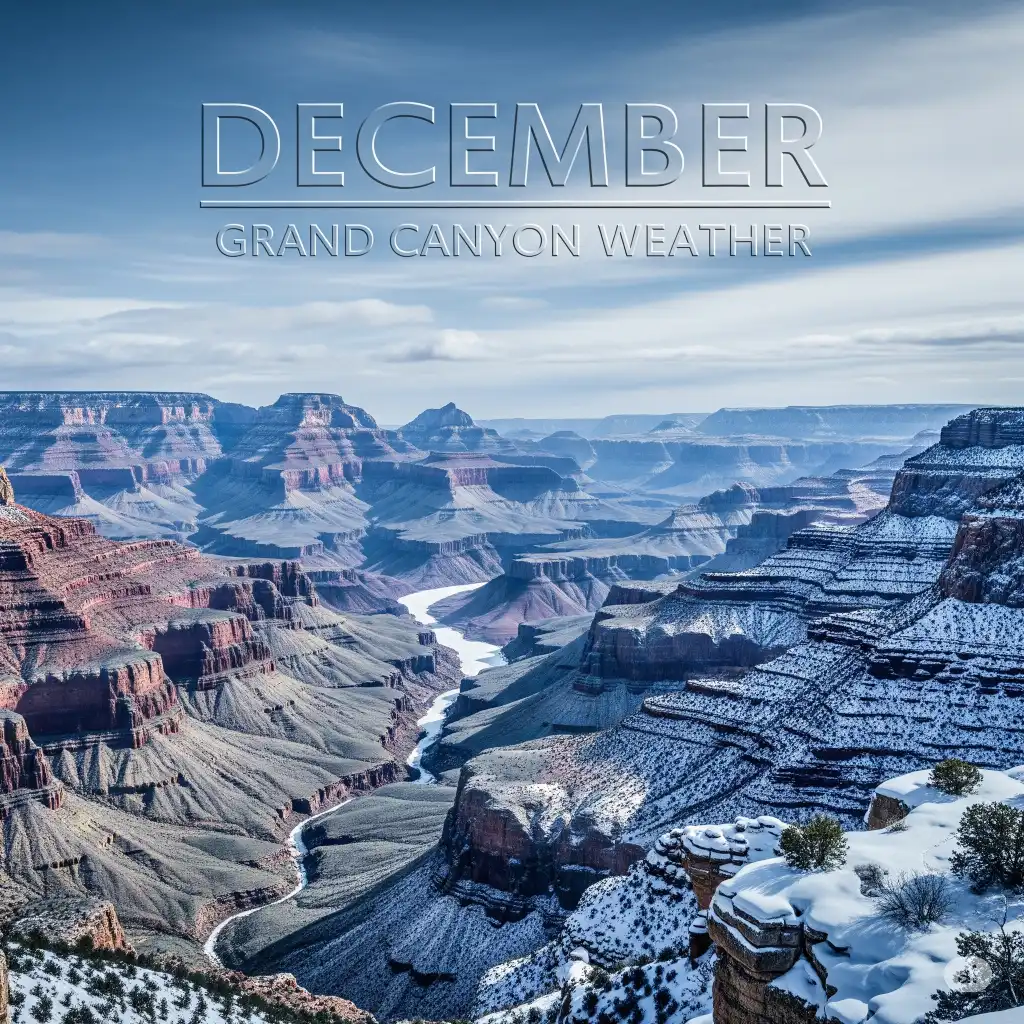
December marks the return of winter. Average highs are around 43 °F, and lows drop to 18 °F. Snowfall becomes common again, and precipitation represents about 8% of the yearly total. Clear days alternate with snowy ones, creating classic winter views.
Seasonal Cheat-Sheet
| Season | Avg Rim High / Low | Rain Pattern | Sky & Light Notes |
| Spring (Mar-May) | 54-71 °F / 25-39 °F | Light showers; snow flurries linger through March | Crisp air = razor-sharp vistas; pastel sunrises over snow-dusted cliffs. (nps.gov) |
| Summer (Jun-Aug) | 82-85 °F / 47-54 °F | Early June dry; late July–Aug monsoon brings brief, dramatic lightning storms | Afternoon thunderheads tower 40,000 ft—epic photo contrast; plan hikes at dawn. (nps.gov, nps.gov) |
| Fall (Sep-Nov) | 76-52 °F / 46-24 °F | Intermittent showers; early snow by late Nov | Aspen gold on nearby high points; low-angle light makes rock layers glow. (nps.gov) |
| Winter (Dec-Feb) | 45-48 °F / 18-21 °F | Snow every few weeks; dry, crystal-clear air between storms | Rim tops turn white, canyon stays red—high-contrast sunrise/sunset hues. Roads may close briefly after snow. (nps.gov) |
Month-by-Month Guide
January Weather Grand Canyon National Park
- Average high / low: 44 °F / 18 °F (7 °C / -8 °C)
- Precipitation: 1.7 in snow-mix
- Quietest month; snowshoe the Rim Trail under sapphire skies.
February Weather Grand Canyon National Park
- 48 °F / 21 °F (9 °C / -6 °C)
- 1.5 in precip; occasional ice on trails—micro-spikes recommended.
March Weather Grand Canyon National Park
- 54 °F / 25 °F (12 °C / -4 °C)
- 1.4 in rain–snow mix
- First desert wildflowers at Indian Garden; crisp dawn light
April Weather Grand Canyon National Park
- 61 °F / 31 °F (16 °C / -1 °C)
- 0.9 in rain
- Snow mostly gone; ideal for long day hikes.
May Weather Grand Canyon National Park
- 71 °F / 39 °F (22 °C / 4 °C)
- 0.7 in rain
- Peregrine falcons nest; stable weather, thinner crowds.
June Weather Grand Canyon National Park
- 82 °F / 47 °F (28 °C / 8 °C)
- 0.4 in rain (dry)
- Hottest inner-canyon temps; start hikes by 5 a.m.
July Weather Grand Canyon National Park
- 85 °F / 54 °F (29 °C / 12 °C)
- 1.3 in rain (monsoon)
- Afternoon storms = double rainbows & lightning—spectacular yet brief.
August Weather Grand Canyon National Park
- 82 °F / 53 °F (28 °C / 12 °C)
- 1.7 in rain (wettest)
- Wild monsoon sunsets; carry rain shell & dry-bag for cameras.
September Weather Grand Canyon National Park
- 76 °F / 46 °F (24 °C / 8 °C)
- 1.4 in rain
- Monsoon fades; golden hour lasts longer, temps mellow.
October Weather Grand Canyon National Park
- 65 °F / 35 °F (18 °C / 2 °C)
- 1.0 in rain
- Aspens peak early month; first frost mid-October—pack layers.
November Weather Grand Canyon National Park
- 52 °F / 24 °F (11 °C / -4 °C)
- 1.0 in rain/snow
- Clear, crowd-free views; North Rim closes after Nov 30.
December Weather Grand Canyon National Park
- 45 °F / 18 °F (7 °C / -8 °C)
- 1.4 in snow showers
- Holiday lights at El Tovar; snow-rimmed canyon makes postcard photos.
Quick Planning Tips
Check forecast before you leave Wi-Fi: Cellular signal drops five miles from the rim.
Dress like an onion: Base, mid, and shell layers handle 30 °F swings.
Respect inner-canyon heat: River temps in July can exceed 110 °F (43 °C).
Watch storm cells: Monsoon lightning strikes exposed points—seek shelter when thunder rumbles.
Additional Weather Insights for Grand Canyon National Park
Temperature Swings and Microclimates
Due to its dramatic elevation changes—from 1,200 feet at the river to over 9,000 feet on some rim peaks—Grand Canyon National Park exhibits extreme temperature variations. A 30–40 °F swing between day and night is typical, especially in shoulder seasons. Microclimates affect hiking and visibility; shaded areas stay icy long after sunny paths have cleared.
Snow Cover and Trail Conditions
Snow typically accumulates from December to March, with trails at the South Rim and higher elevations often requiring traction devices. The Inner Canyon rarely sees snow but remains shaded and cool. Snow cover can limit access to scenic overlooks and affect backcountry travel.
Sunshine Hours and Visibility
Grand Canyon National Park enjoys an average of 277 sunny days per year. Winter months average 70% sunshine, while spring and summer exceed 85%. These clear skies allow for outstanding visibility, with distant views stretching over 100 miles on calm days.
Rainfall Distribution and Flash Floods
Annual precipitation at the South Rim averages about 13.4 inches. The North Rim receives over 25 inches, while Phantom Ranch averages less than 8 inches. Rainfall peaks during July and August due to monsoons, which also pose flash flood risks in lower elevations.
Save or screenshot this guide, then keep an eye on live webcams and NPS alerts for last-minute changes in Grand Canyon weather. With the right prep, every season shows the canyon in a different, unforgettable light.